

040 Knowing
Two stories that ask, but how do we know?


1.Waiting
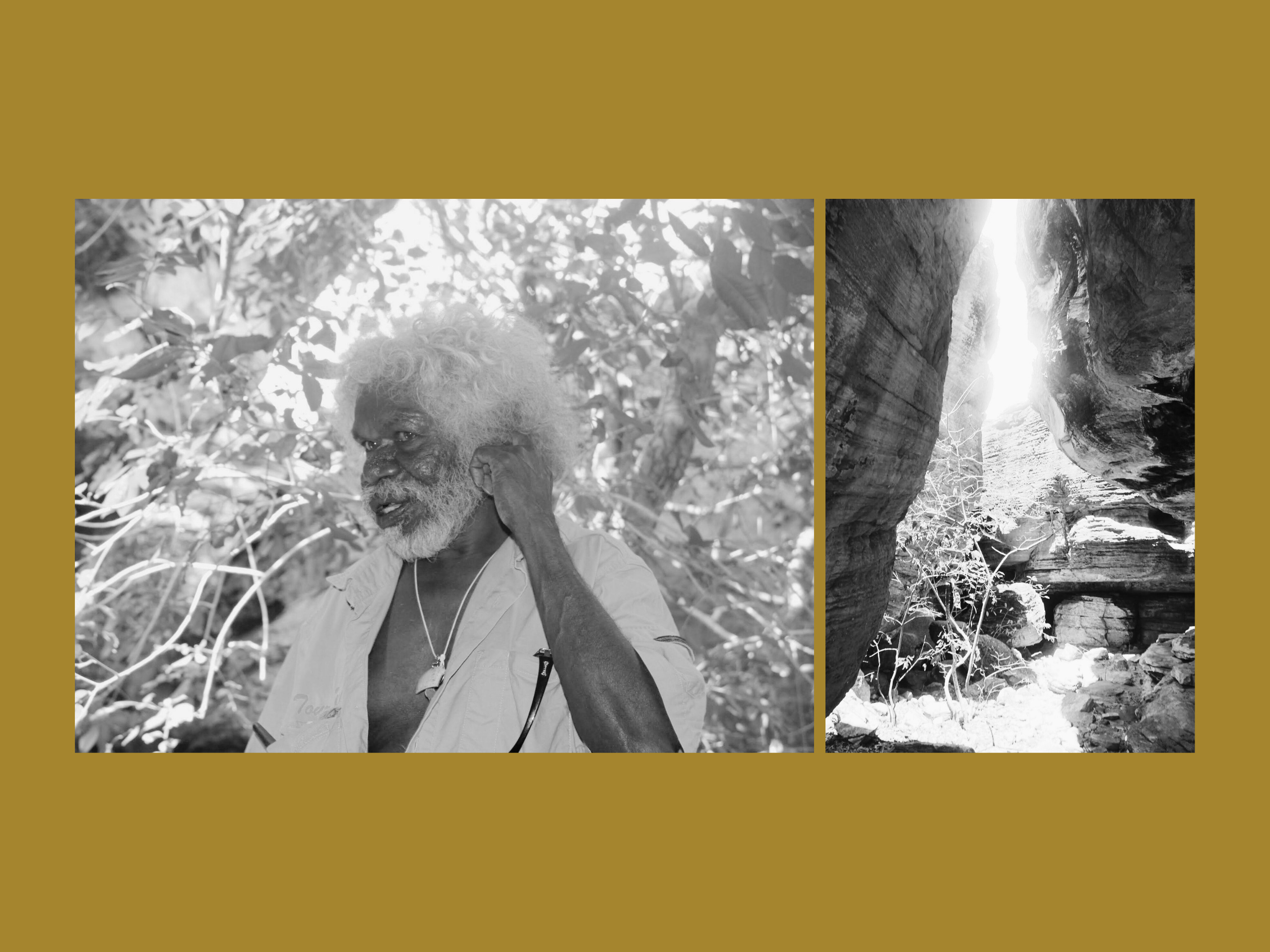
In 2012, I stood on the side of the road in the hot, red desert and waited. An indigenous guide had just led us on a long walk to see 20,000-year-old rock paintings, and I had asked him a question. I stood and waited for an answer. After about a minute without a response, my mind, already in a moderate frenzy (the default), began rapidly questioning the situation. Did he hear me? Was it a bad question? Does he not like me? Is something wrong? Did I do something wrong? Should I move away?
There were a few other tourists hovering around me, waiting their turn to speak with our guide. When the silence began to feel like acute awkwardness, I began to turn and step away. A young Danish woman who'd been backpacking through the area for almost a year scowled at me and shook her head – a quick and fierce expression that I could read. Oh okay, I thought. I'll stay.
At about 90 seconds, he began to speak. He paused between words, giving me an answer that seemed, truthfully, from a realm beyond my question. I nodded slowly and bowed a little thank you, bewildered.
In the quietness of mind that opened up as I stepped away and looked out at the red rock and brown-green scrub, I understood that the awkwardness had been entirely my own.
Wisdom is not quick. It is deep.
Listening is not quick either. Not if you’re listening for wisdom.
When, in Western culture, did we start to think and speak so quickly? To respond, to banter, to interrupt? To mistake certainty of mind for strength and uncertainty for weakness? To experience being called "quick-witted" an exalting compliment and being called "slow" a dismissive put-down?
2.Knowing
We are brainy people. As a society (in the West, at least), we privilege understanding the world through a cognitive lens. But over-intellectualizing things can kill off our other ways of "knowing".
We privilege our brain's intellect so much that the suggestion that there are other ways of "knowing" beyond our cognitive intelligence may seem a bit whacky.
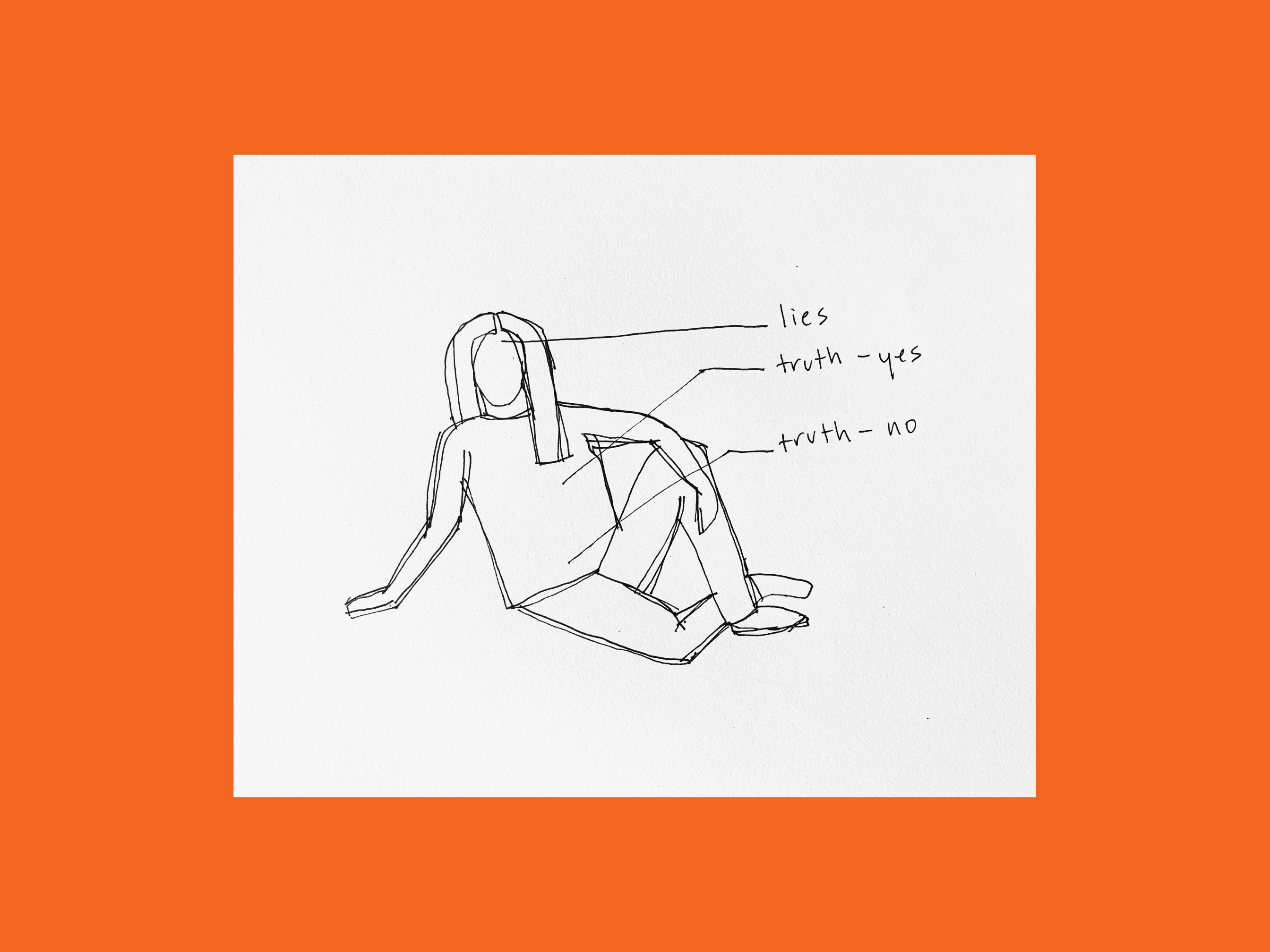
Let's start with the gut, sometimes referred to as the "second brain". It has its own nervous system that governs digestion but also intuition and “gut feelings”. It's generally understood to be that "spidey sense", a kind of physiological warning. "No," it says.
Now let's look at the heart. The heart also has a complicated nervous system that sends messages to the brain. What does the heart tell us? Well, as the saying goes: "follow your heart". And so I think our heart tells us the truth about ourselves and the truth about our desires. "Yes," it says.
Now let's regard the body as a whole. The field of semiotics studies how we derive meaning from physical sensations, movements, and embodied experiences beyond just language and cognition. Our bodies can "know" things in a visceral, non-cerebral way. And so semiotic healing modalities are on the rise.
Now let's consider life itself. Gabor Mate explains that childhood traumas have us give up our authentic selves in order to belong to the group, and therefore in our very dependent state, survive. We disown our gut and heart. We forsake ourselves. The brain takes over, and we rationalize away our intuition and strategize around our feelings.
In fact, if the heart and gut tell us the truth, Gabor Mate claims the brain tells us lies.
3.Dancing
To just state facts, I don't like performance art. Yes, Marina Abramović's show at MoMA was revelatory. Exhilarating. But I've been socially obligated to attend other performance art events that have felt as though I’m handcuffed to the soupy, rat-infested train tracks of the New York City subway. Loud, incomprehensible noises; dark crowded spaces; flashing LED lights; putrid and clashing odors; indefinite time periods; forced participation. All while claiming to be "an exploration of the paradox of existence in a capitalist world." Or something.
This weekend, though, I attended Flourish! Florecer! directed by Rishauna Zumberg. It was outdoors, collaborative, and a celebration of nature. It had a time bound program. It was a beautiful day. Yet it was 98% social obligation that had me trek all the way up to Washington Heights to attend.
As I approached the rocky outcrop in J.Hood Wright Park, the site of the performance, I braced myself to endure the incomprehensible. And, sure enough, off in the distance a group of people in indigo clothes were clustering together, making weird shapes with their bodies across the ridgeline of the hill. “I’m such a supportive friend” I thought to myself, “practically a saint, really.”
But as I neared the performance poet Bureen Ruffin joined the dancers and offered a cognitive hook into the artwork as a whole. (Even though poems are made up of words, they seem to magically bypass the brain and go straight to one’s heart.)
Then, one of the dancers, Jinyeong So, began to move the audience to form a circle around the central boulder. She had us sway, sing, and chant. Mortifying. I’m a cognitive person. Not an in the body person. I’ll read in public, but dancing or singing in broad daylight feels like walking nude down 5th Avenue.
I stood between two very self-expressed swaying humans as a kind of shelter against attention. My rib cage tightened with the anxiety of it all. But then, like a tuning fork, the melody of the city, the chirping birds, the harmonizing voices, and yes, the swaying of my own body in sync with the 50 or so people around me, felt light and free. It felt beautiful. I sang and watched the movement of the dancers trace around the rock. The present moment started to feel HiDEF. Magnificent.
What do we call it when we experience something beyond the cluttered fake intelligence of our minds? Transcendent? Yep, that’s it. Transcendent.
"Wisdom is not quick. It is deep." Yes & thank you.
Gut = no, heart = yes. So simple, but I love it.