

OoC | Sauna
Sweat it out, let it free, and we might find... our collectivity

1. Sweat
I love summer. And yet here I am casting back to February, the day after the blizzard, when I had salted and shoveled the sidewalk at 1 am and then 6 am and then every two or three hours until 10 pm. I live on a corner. It’s a lot of sidewalk.
The next afternoon I put my enormous rubber boots back on, my body stiff and tired, wrapped myself in a now filthy puffer coat and took a car to Williamsburg. My neighbor Adam had gifted me a pass to the Sauna Festival he organizes on the East River.
Once I arrived I speedily shuffled half a block through the freezing air and around large mounds of snow in nothing but rubber slippers, swimmers, and a towel robe.
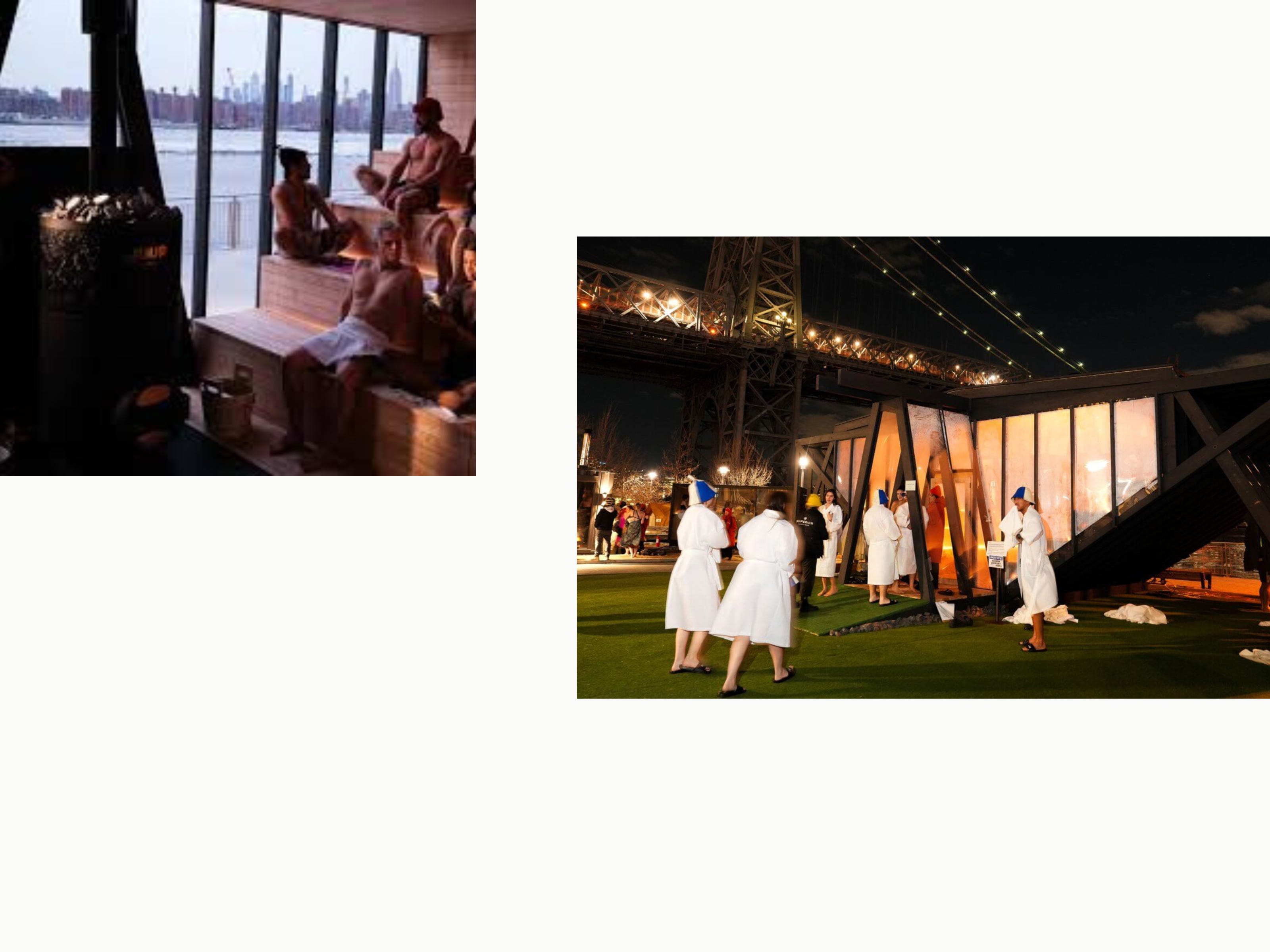
Once at what I can only describe as a riverside sauna village, I briskly kicked off my slippers and stepped into the first sauna. It was by far the biggest, with tiered bench seating on either side and a glass wall looking out over the river. With only a few people inside, I sprawled out by the window and gazed through the fading light towards the Williamsburg Bridge and the Statue of Liberty.
I found my breath. Within minutes my muscles gave way to the heat as sweat began to do its quiet work. I fell into a kind of wakeful rest.
This is even better than I thought, I sighed.
2. Sauna Diplomacy
About two and a half hours in I wandered into what almost looked like an oversized whisky barrel knocked on its side. A wooden bench ran around its interior, and a black compact wood-burning stove was suspended in the middle like one of those fancy modern fireplaces. At the barrel’s far end, a floor-to-ceiling circle pane of glass looked out over the river towards FDR Drive.
The sauna began to fill up and, figuring I was almost overcooked anyway, I offered up my part of the bench to a young couple. But just as I did, two middle-aged Finnish diplomats wearing nothing but their swimmers stepped in. One cheerfully said with a hand on his bare hairy belly, “hello, we’re here to give a talk on sauna diplomacy.”
“Sauna what?” I replied, wanting to make sure I’d heard that right before I got full-blown delighted.
But I had heard it right. Beaming, I backed up and leaned against the sliver of curved wall beside the door’s hinges.
In Finland, they told us, political leaders (and people generally) sometimes use the sauna as a place for important conversations. They find that in the heat, many of the usual markers of power and concealment are left outside. You know, like clothes for example.
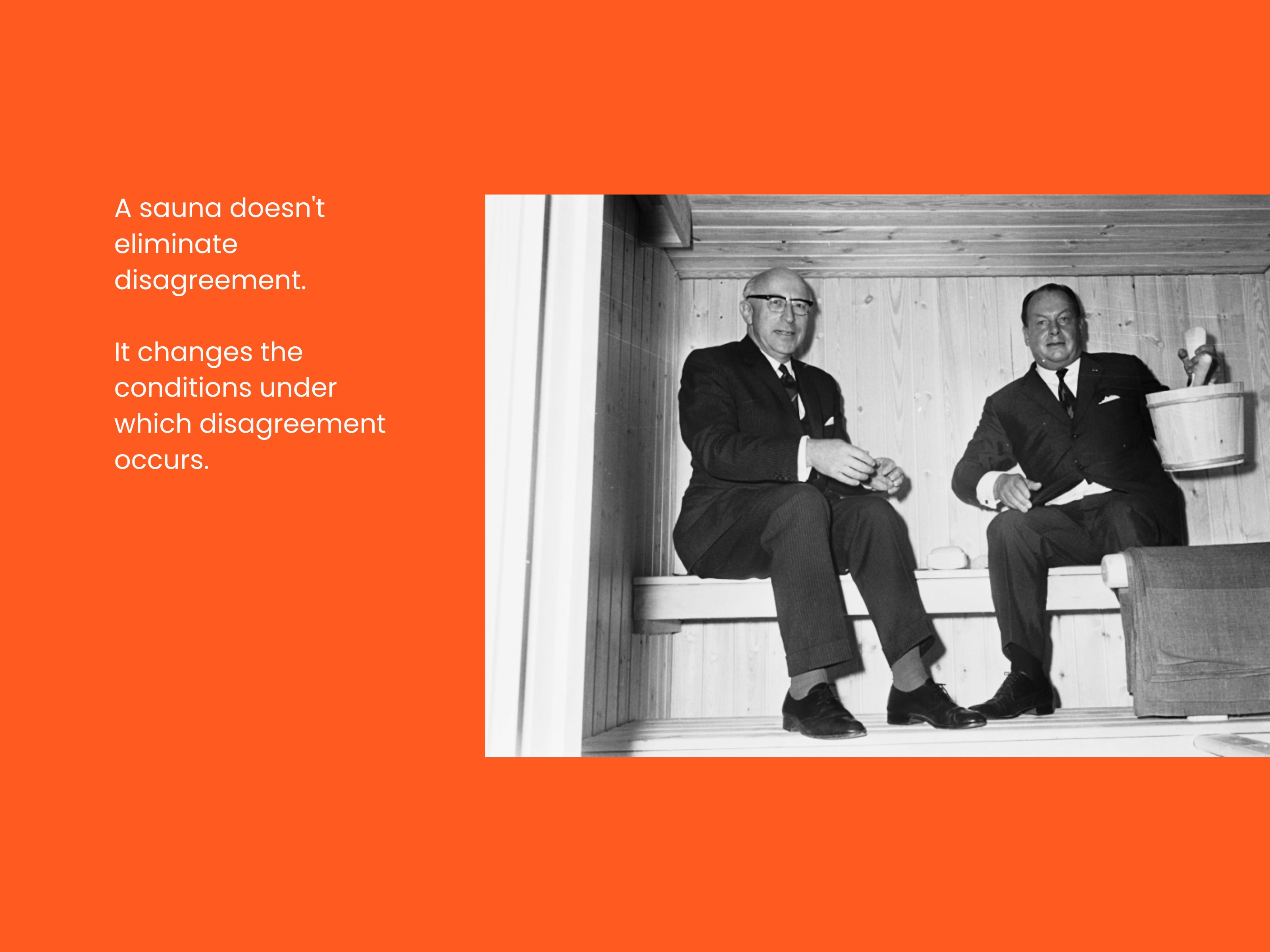
In fact, in 1960, Finnish President Urho Kekkonen and Soviet leader Nikita Khrushchev famously took a sauna together. As Cold War tensions simmered between East and West, the two men talked and sweated inside a wooden hut through the night. Reportedly by 5 a.m. Khrushchev had agreed to support Finland’s efforts to strengthen its connections with Western Europe.
Today in DC the Finnish embassy runs a Diplomatic Sauna Society and even the New York Times has written about it.
3. Collectivity
One of my favorite memories of my neighbor Adam, who introduced me to all of this, is running into him in the park as he wandered through a grove of trees towards the public pool wearing nothing but his swimming trunks and reading glasses. A book under his arm and a towel over his shoulder, he waved hello.
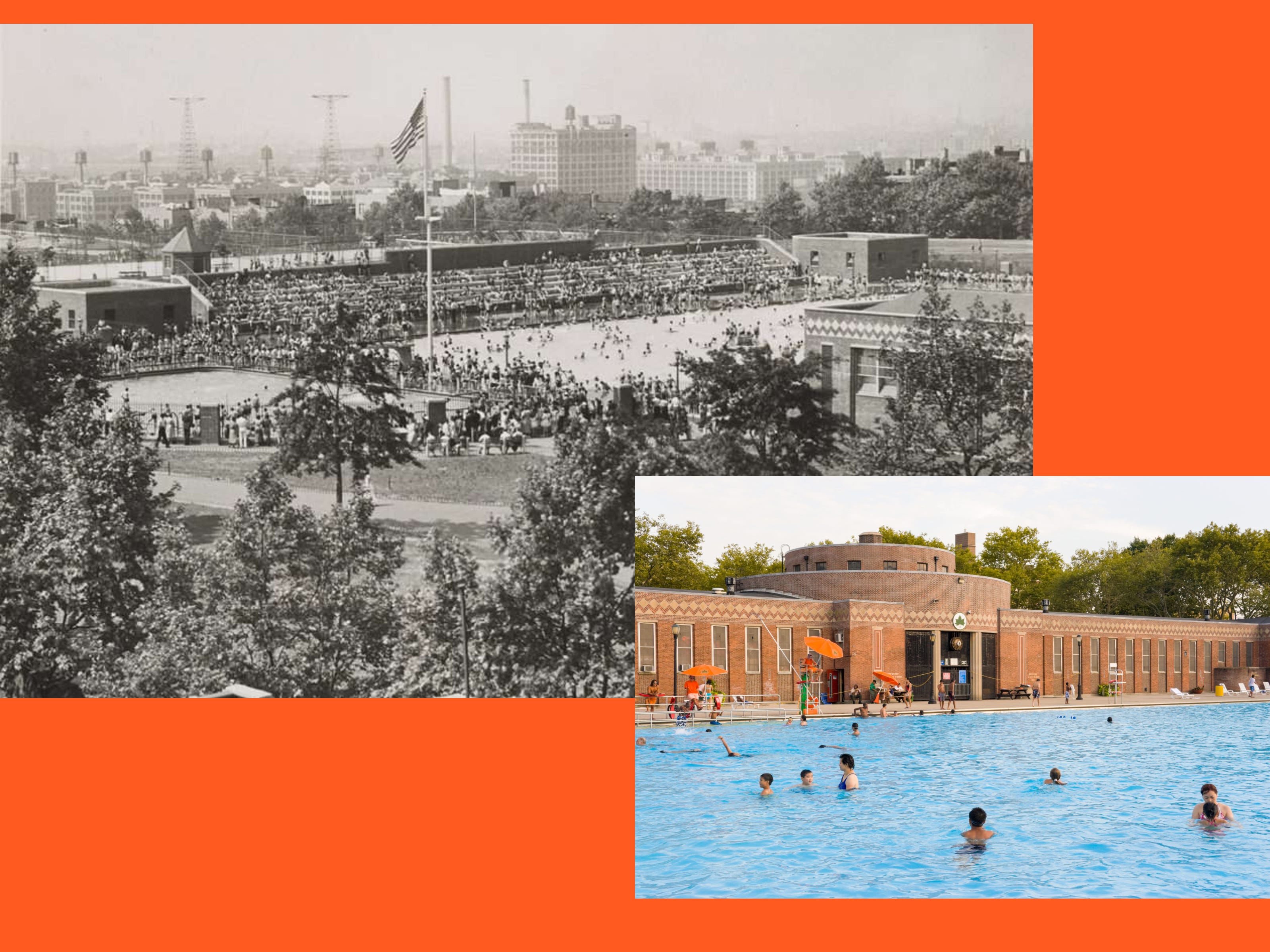
Like all public NYC pools, the Sunset Park pool has extremely strict entry requirements (no bags, cell phones, or colored shirts, for example) which means during the hotter months it’s not unusual to see locals strolling the streets in their swimmers.
I love this annual reminder that summer is here. And that in this neighborhood we choose collective joy over so-called social propriety.
More recently, Adam (who among many other things is an Englishman) invited me and two other neighbors for tea so he could practice a talk he was giving at a global sauna conference in Bristol the following week.
Listening to Adam while I bit into my scone with cream and jam is how I learned that the social and spiritual dimensions of sauna weren’t just a personal insight I’d been circling. They are openly discussed guiding tenets of the sauna world.
Exhibit One: In 1978, Mikkel Aaland published Sweat, a cultural and historical survey of sweat bathing traditions around the world. Again and again, across countries and cultures, he encountered versions of the same idea: sweating together was never only about physical health. It was about community, ritual, and belonging.
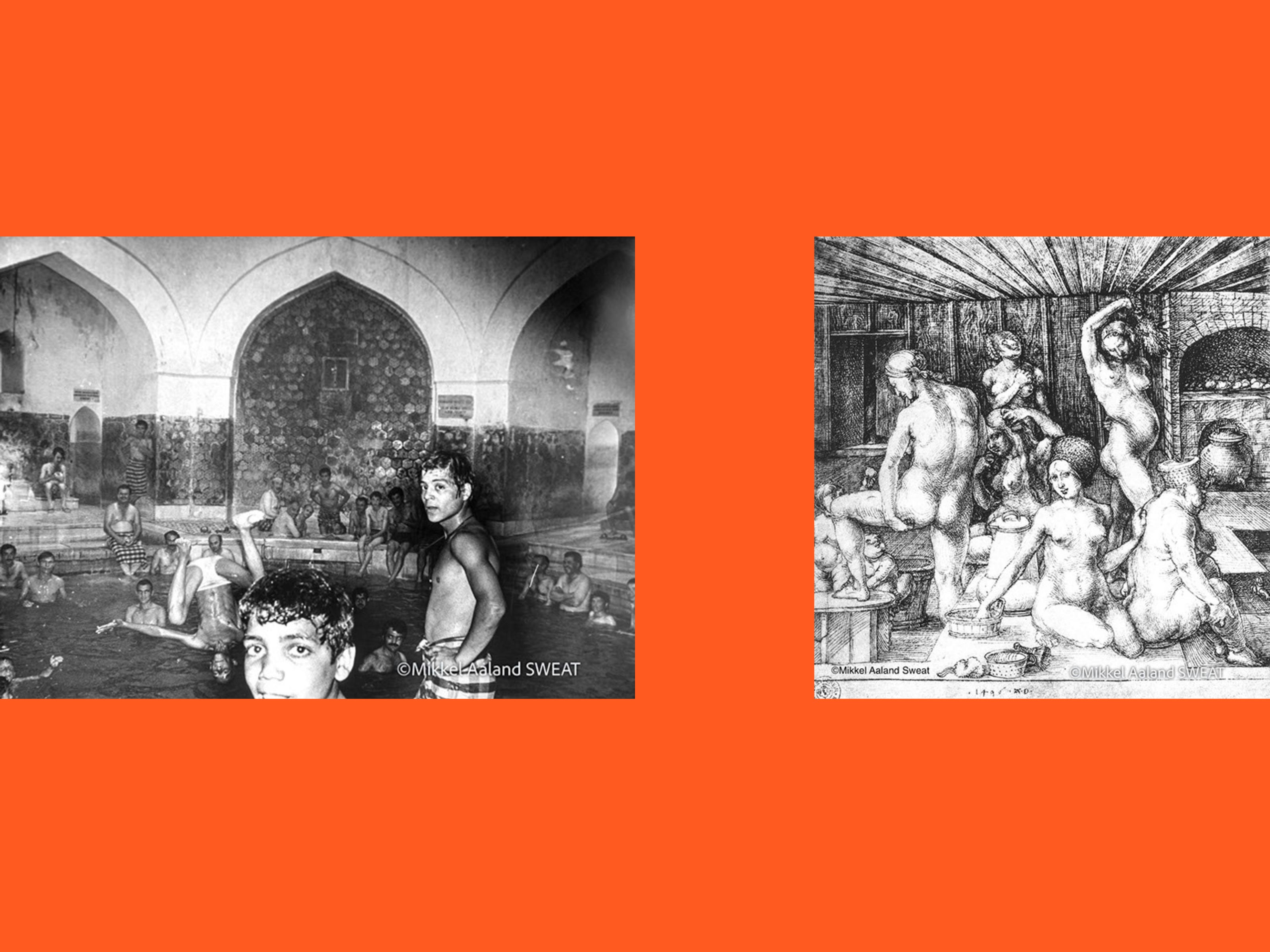
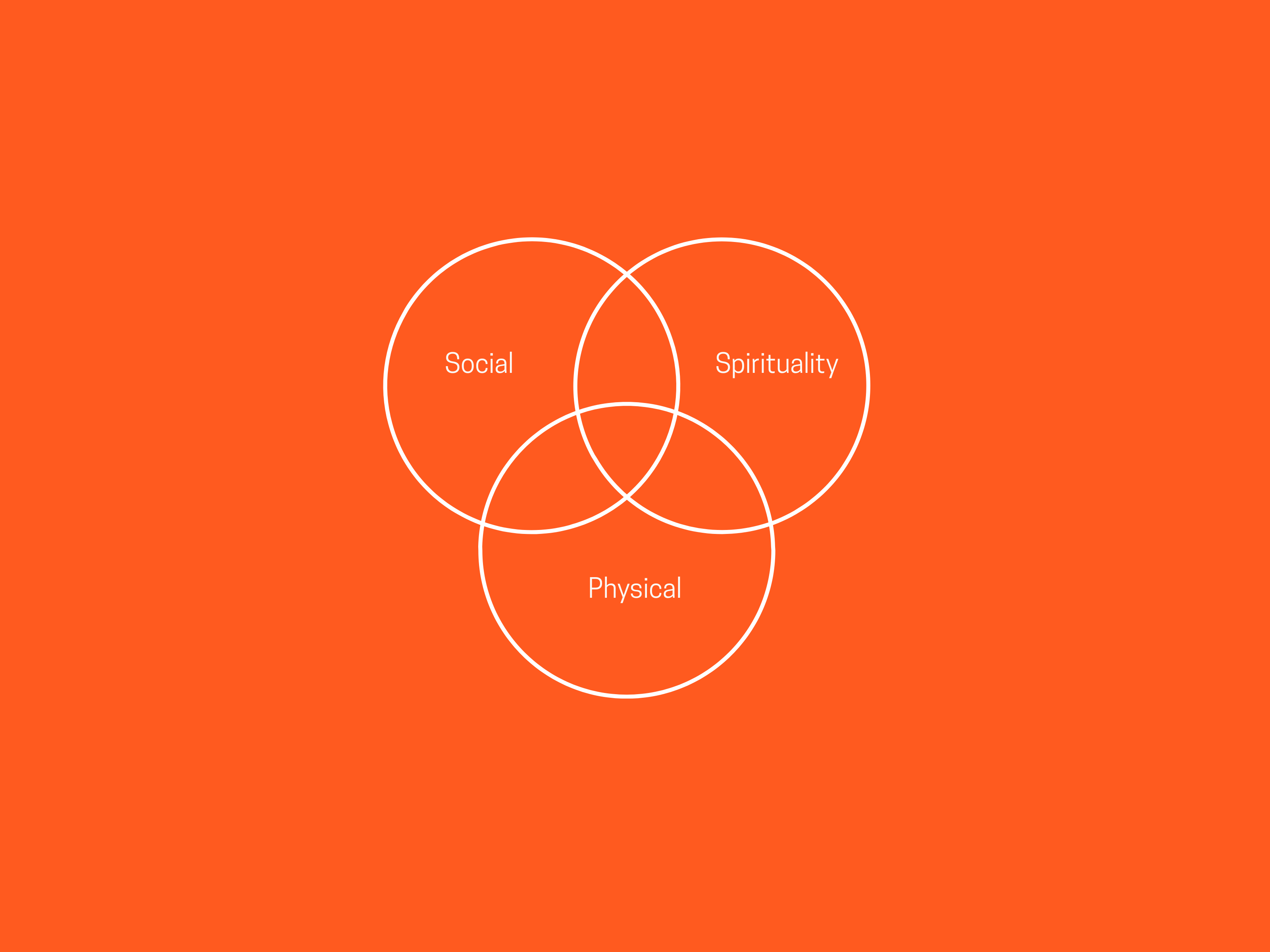
Exhibit Two: More recently, sauna educator Justin Juntunen described resilience as having three dimensions: physical, social, and spiritual. The sauna experience seems to be grounded in all three.
4. The Space Between
There are many ways we gather.
Some are inherently adversarial: courtrooms, football matches, political debates.
Others are exclusive: cultural ceremonies, private clubs, rallies.
These qualities are not inherently good or bad. They can be joyous. They can be oppressive.
But there are also ways we gather that tend to the space between people.
Ways of gathering that make that space beautiful and good and true.
A sauna seems to be one of those ways.
People connect through the shared experience of warmth and wellbeing, but in sweating together they also seem to cultivate a collective openness. To see and hear one another. To enjoy one another.
To become present to the collective miracle of being alive.
Perhaps that is why the social and spiritual dimensions of sauna are so often discussed together.
I personally believe that the space between us is where God loves to dance.
Beneath all the heat and steam and cold plunges, sauna culture appears to be tending to a very old human problem:
How do we create the conditions for that dance?
As always, I love your writings. You always create a clear picture which gathers the reader in.
Thank you