

067 What's Missing?
Not Riches. Not Fame. Freedom.

01 Nervous/Excited
On a recent Friday morning I woke up earlier than usual with my hair still slightly wet from having washed it late the night before. I had that classic nervous/excited energy - the type that requires you to go to the bathroom urgently a few times.
I brushed my teeth and piled on some foundation and tried to look nice and respectable. I made a coffee and poured it into the stainless steel cup my friend insisted I buy in order to avoid microplastics.
Then my phone buzzed to say the car I had ordered the night before was outside. I slipped on my chunky silver shoes that I bought from Century 21 especially for occasions like this, and heaved up a box of waters. Once that was plonked in the trunk of the SUV I ran back inside to drag out my trusty oversize suitcase full of the carefully prepared program materials.
Once on the Bayonne Bridge as we headed to Newark, New Jersey, I gasped at the beautiful clear day, and given I’m not usually functioning until much later, I felt strangely elated. Awe-inspired, even.
At the conference space, my partners and I carefully laid out each seat with a colorful accordion worksheet, a pen, and evenly spaced program materials in the center of long shared tables.
Satisfied with the result, I darted to the bathroom one more time.
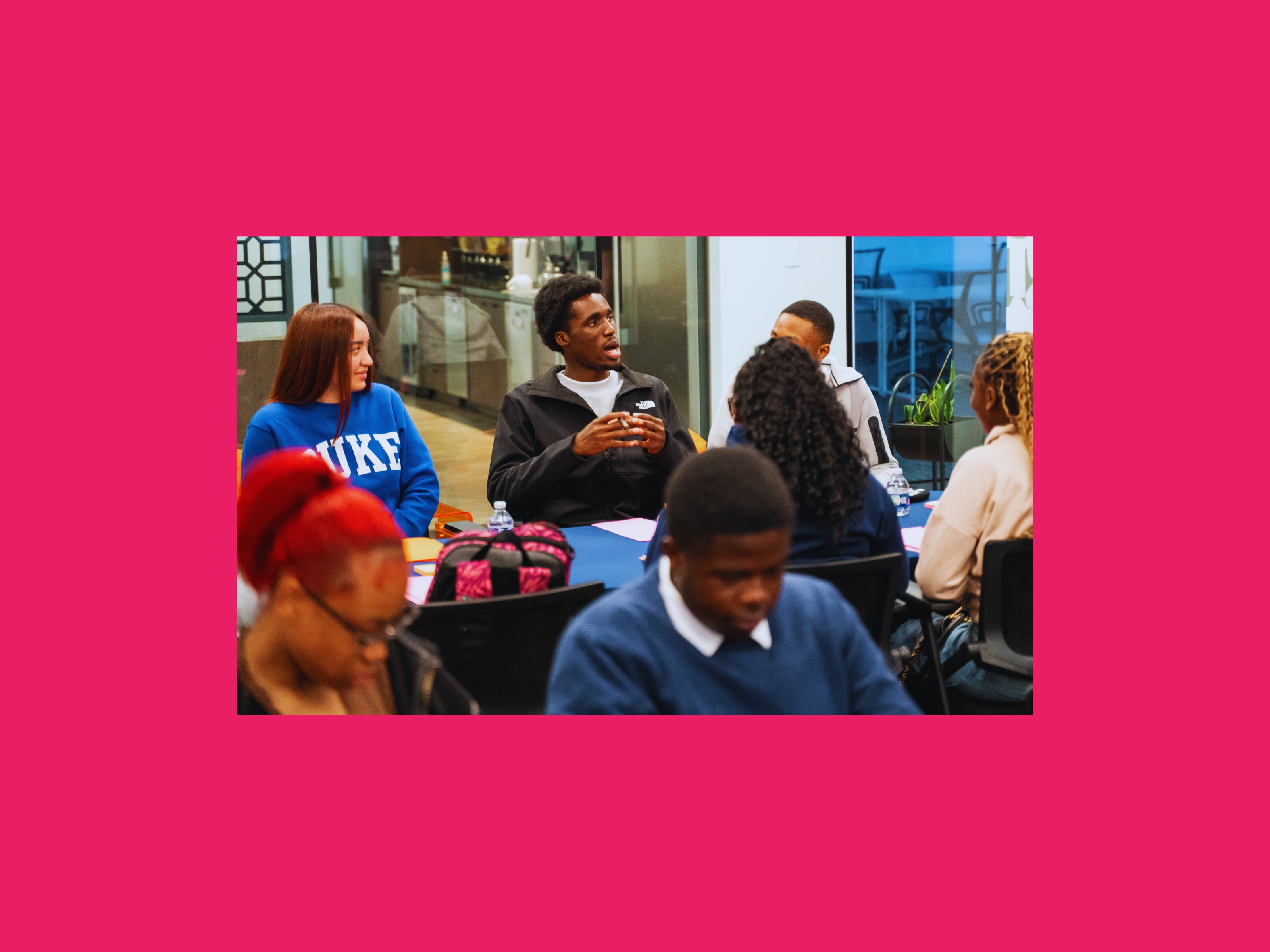
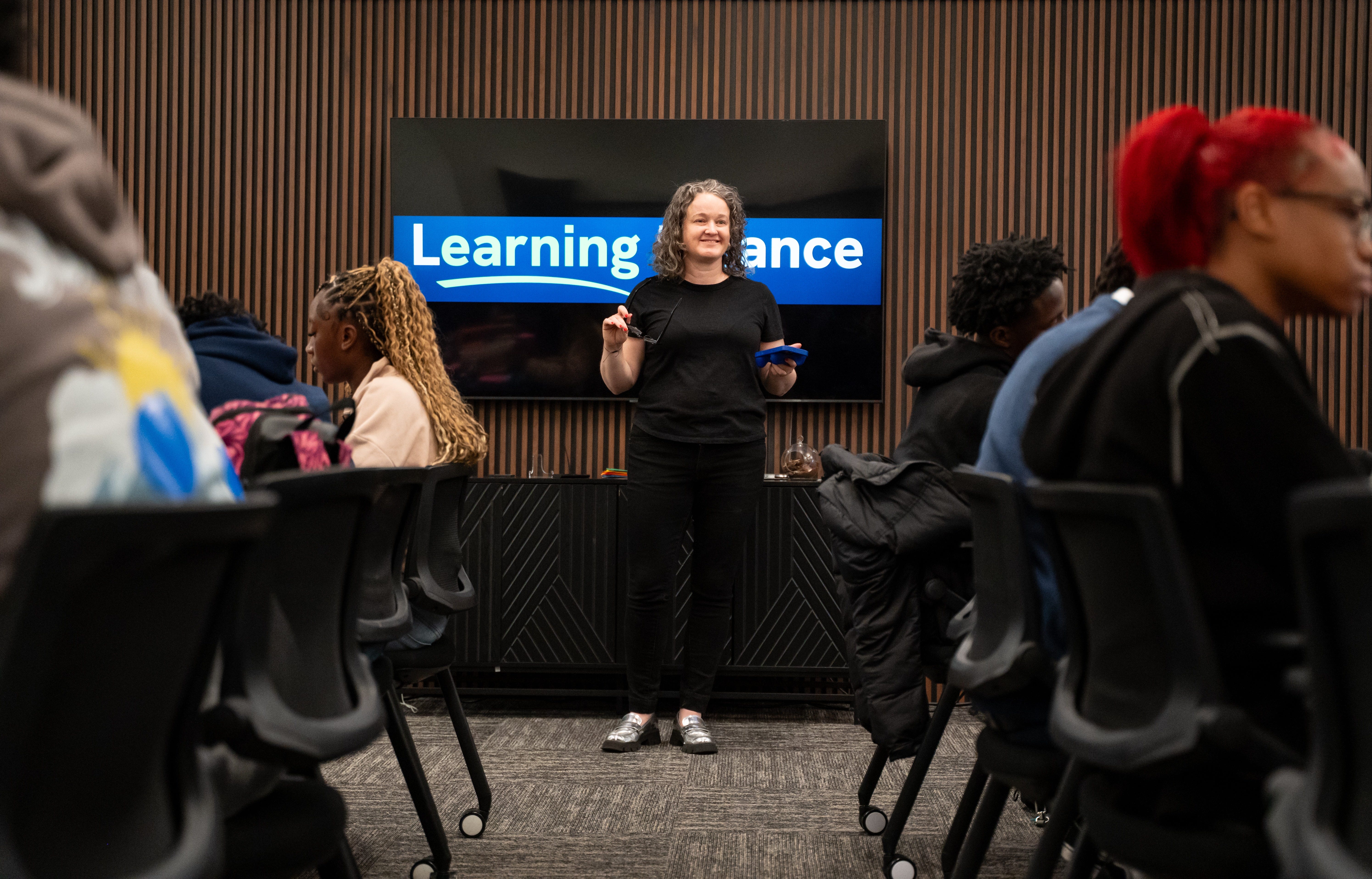
When I returned, more than 30 Newark seniors were already seated, ready to begin our co-design session on Learning Finance, a year-long financial literacy program that awarded senior high school students in Newark up to $1,000 for their commitment and participation.
I beamed at the sight of them. Today is going to be a good day, I thought.
02 The Context: Billions In. Little Stays.
Over the past three decades, education has been touted as the solution to reducing economic inequality. The way to lift millions of people out of poverty in the United States.
And yet, here we are thirty years later, in a moment where the gap between the wealthy and the poor is wider than ever.
But, billions of dollars move through historically underinvested communities in the form of schools, development, infrastructure, and public-private investment.
The founders of PSwrx (a finance and real estate organization specializing in charter schools) have helped deliver nearly $3 billion in investment into the communities they serve. And as they observe:
“While significant investments are being made in the neighborhoods we serve, the economic benefits of those investments rarely reach community members themselves.”
So where do the profits go?
Well, often to development firms, financial institutions, and construction companies whose owners live somewhere else entirely. Like, off the top of my head, Connecticut.
One of the projects PSwrx piloted this past year to address this problem is, frankly, so simple it’s ingenious:
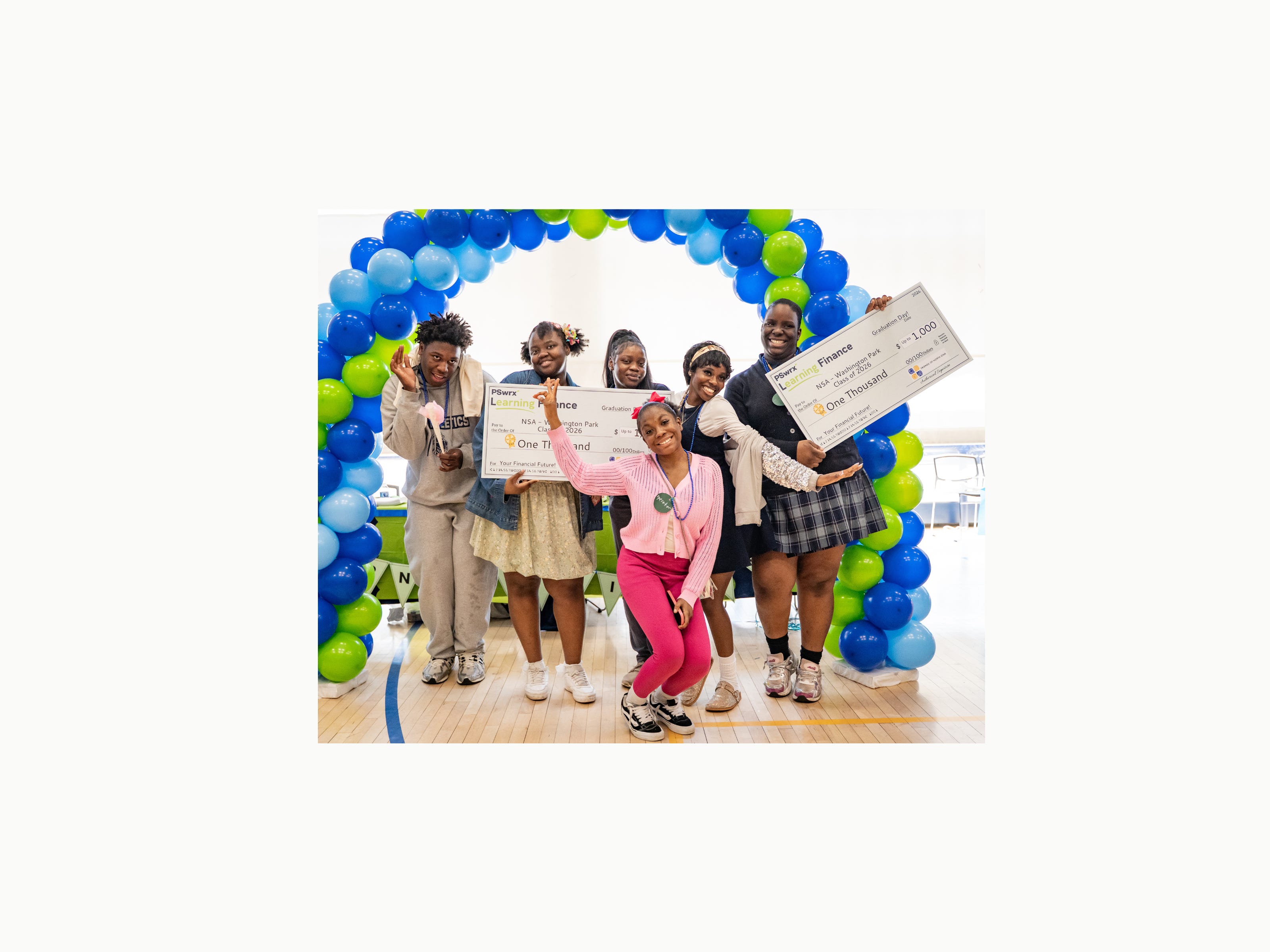
They contribute real dollars, up to $1,000 each, directly to students.
This matters, not least because college students with savings of just $500 are 4× more likely to graduate than peers without savings.
Learning Finance (a pilot program that engaged 360 seniors in Newark this past year) does teach financial literacy. Of course.
But it also sets out to create real financial participation, agency, and possibility for young people in Newark with real dollars.
03 "We don't subscribe to your newsletter to read about the economy", you say?
Oh right.
Pedagogy.
Restorative Justice.
Being human centered.
AKA - Creative Civility.
I got you.
a. Grounding & Clearing: Our Language around Money
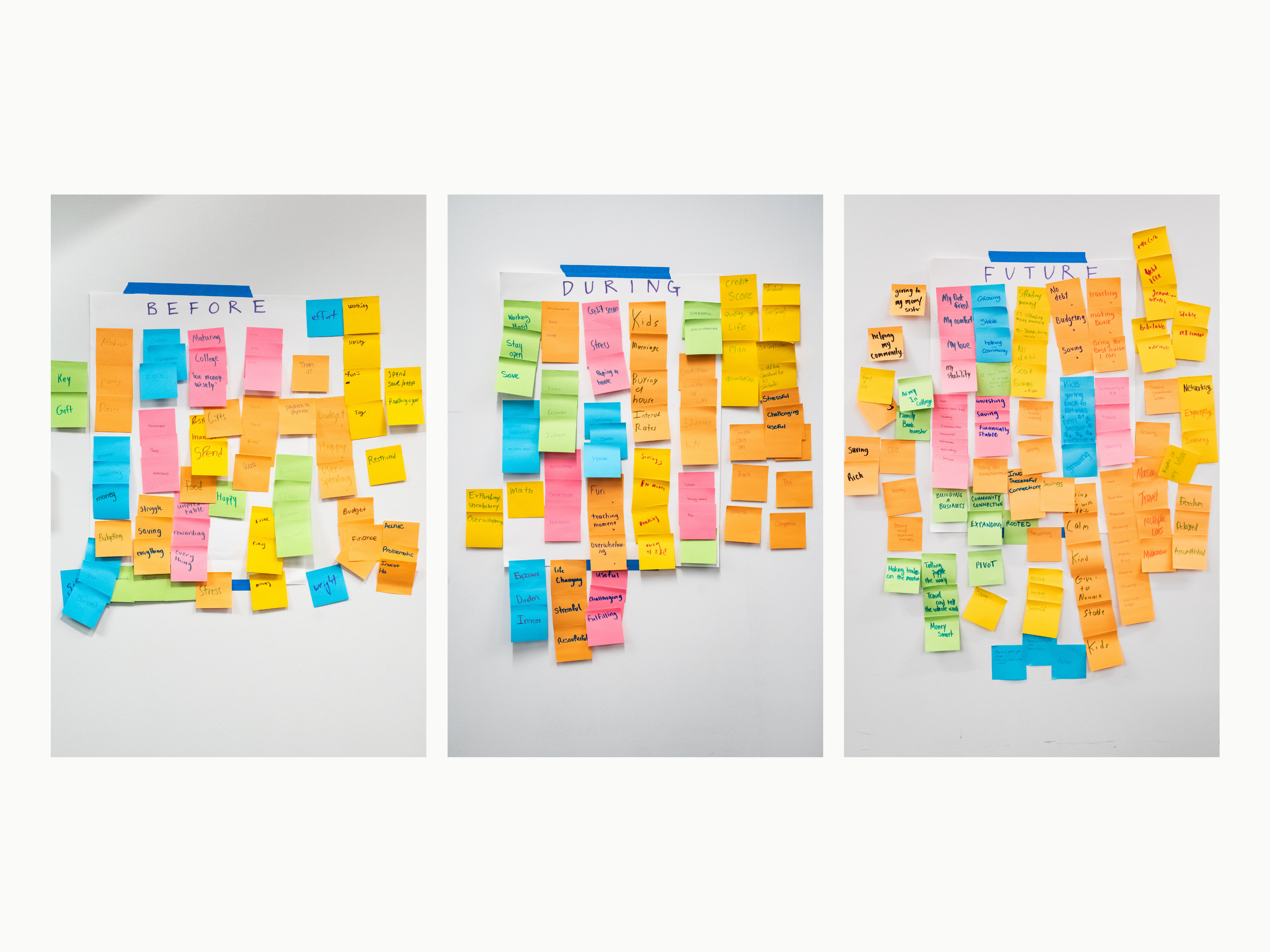
The first thing these extraordinary young people did together was ground themselves in their lived realities and relationship to money. Not to mention their relationship to the effusive, purportedly opportunity-laden U.S. economy (that actually just tends to covertly concentrate power).
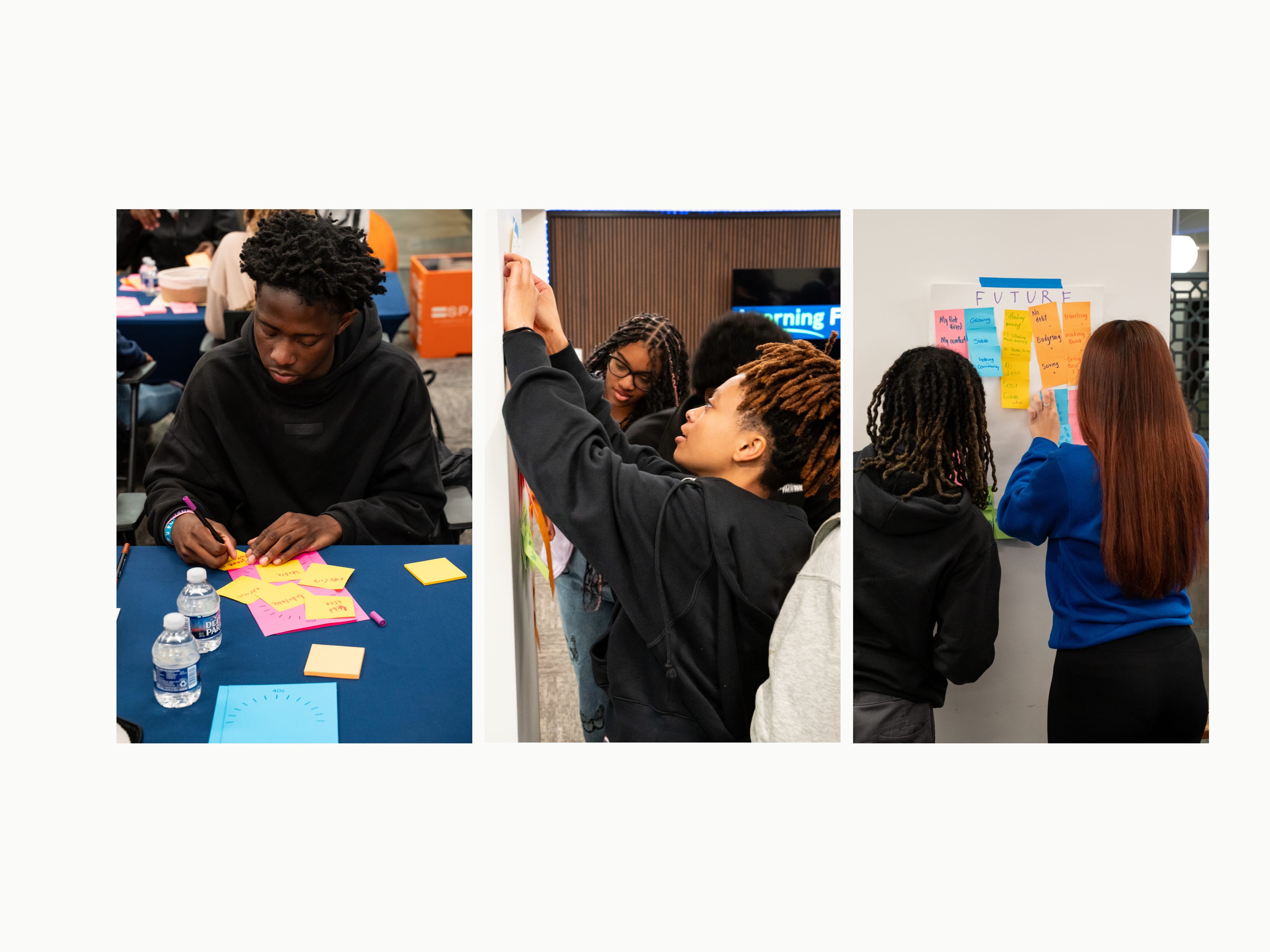
We did this by bringing awareness to the language we’ve inherited and actively use around money in different contexts.
b. Survey!
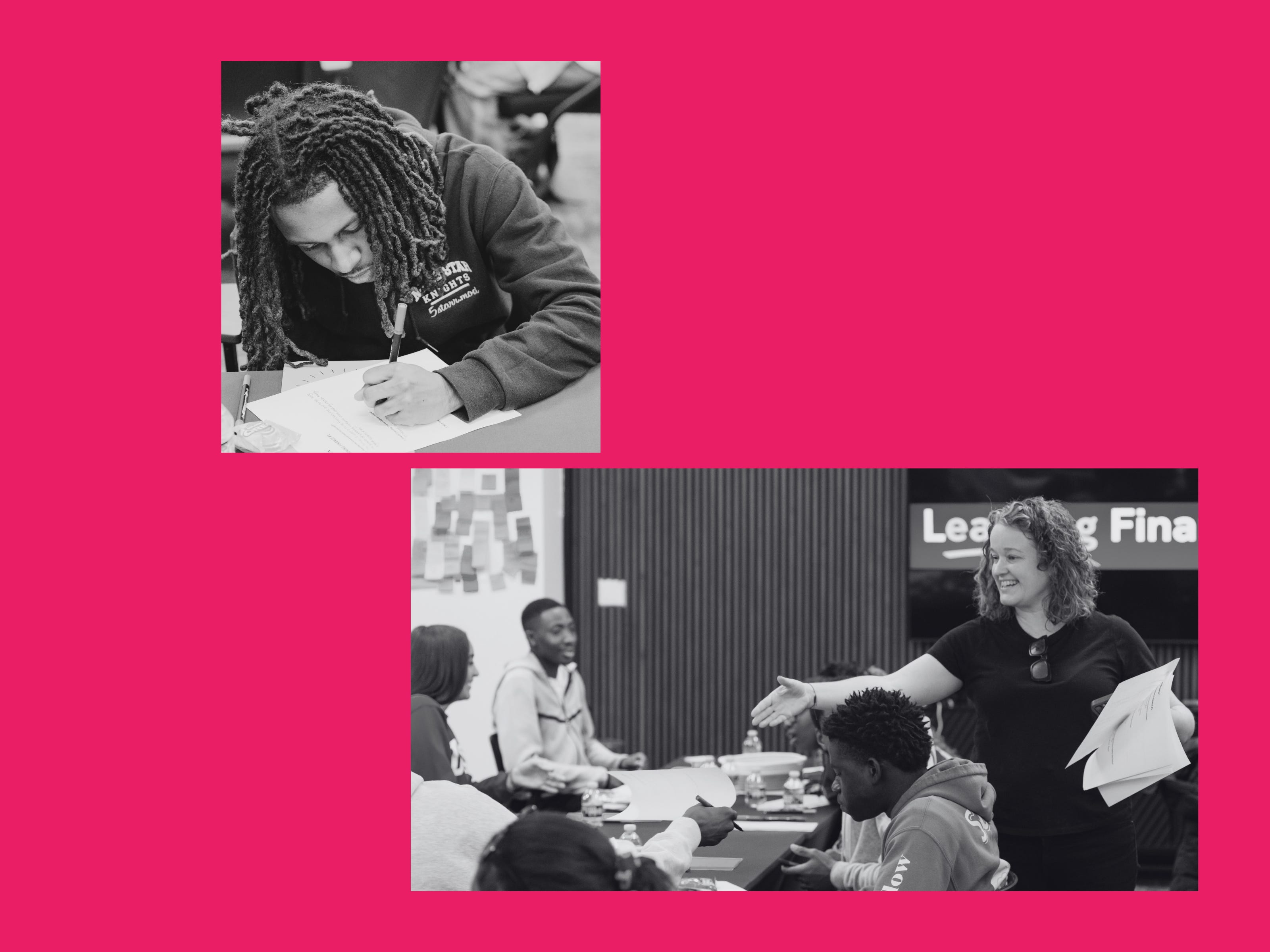
The equity-by-design threads were designed by my partner on this project Meeta Gandhi. Three open ended and simple so as to avoid questioner bias, the same survey was issued twice to notice shifts once we contextualized what’s at stake in their future.
c. The Accordion Worksheet: Building Backwards from Future Vision
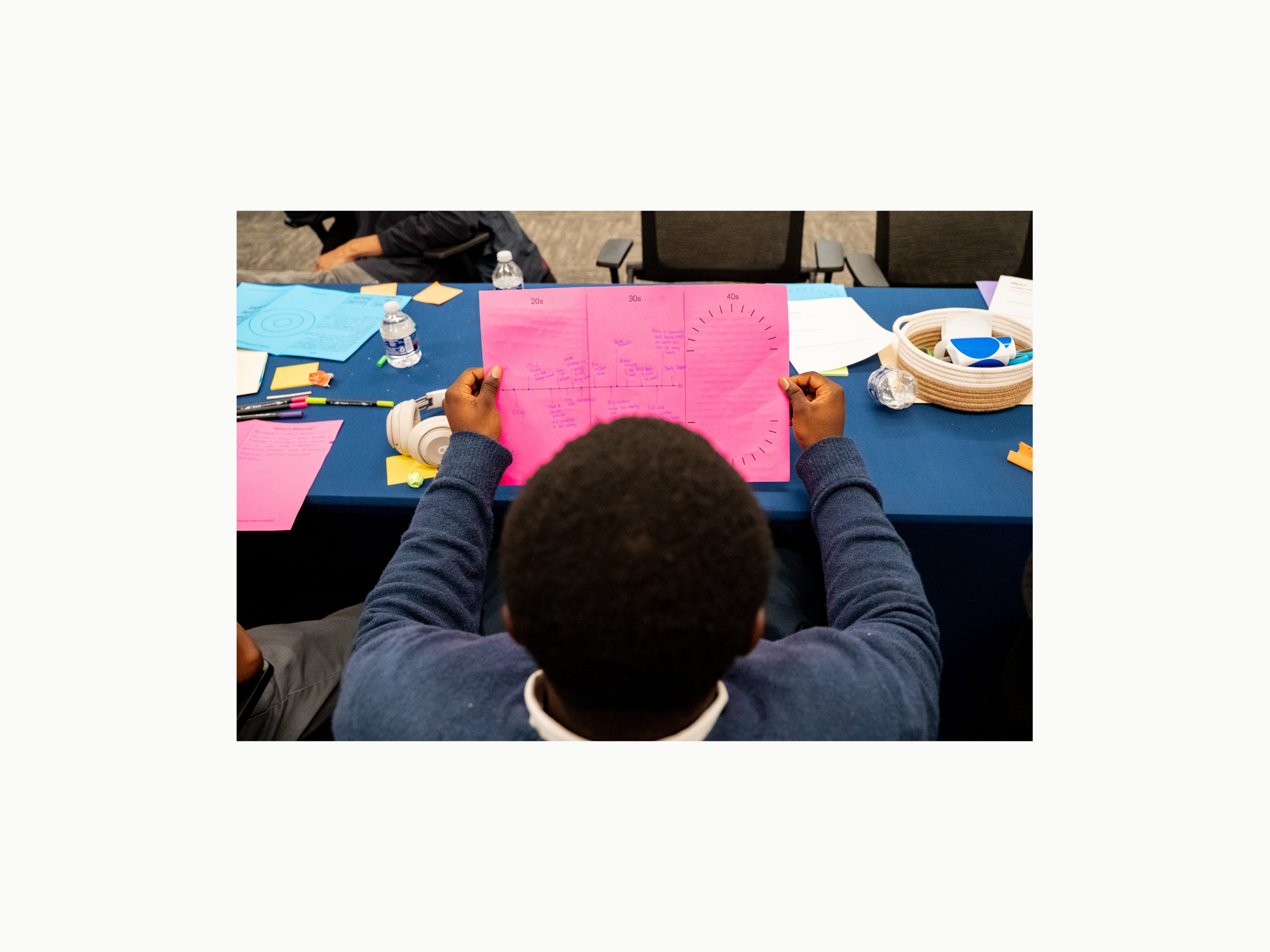
The third thing we did was engage with an accordion worksheet that took us first to our far-off vision for our financial future at forty. (LOL, if only they knew how fast it actually comes.)
What did we want our lives to look and feel like in that almost impossible to imagine time frame?
We then unfolded our worksheet and worked backwards.
To have this vision come to life:
what would need to be in place in our thirties?
and then our twenties?
and what do we need to be working towards now?
Of course, this is a challenging and almost futile exercise.
Life doesn’t unfold along a linear line. We get lucky, or unlucky. We discover through experience what’s truly important to us and it’s rarely what we wrote down on a worksheet at 17.
“What I’m asking you to do is really hard and kind of impossible.” I might have called out over the group more than once.
It tends to take years of dancing with reality to figure out how to bring our deepest commitments and contributions to life. Which is why it takes so much courage to work towards a dream.
“Be present to the thoughts and feelings coming up for you. The discomfort - that’s where the valuable insights are.” I kept repeating.
Then we asked the big questions:
What is missing?
What is missing for you now, that if it were present would make a big difference for you?
What is missing that the program Learning Finance (even in your wildest dreams) might be able to help provide to make a difference for all the young people coming after you?
The group, in an almost meditative state, wrote down what was missing. Then we shared as a group.
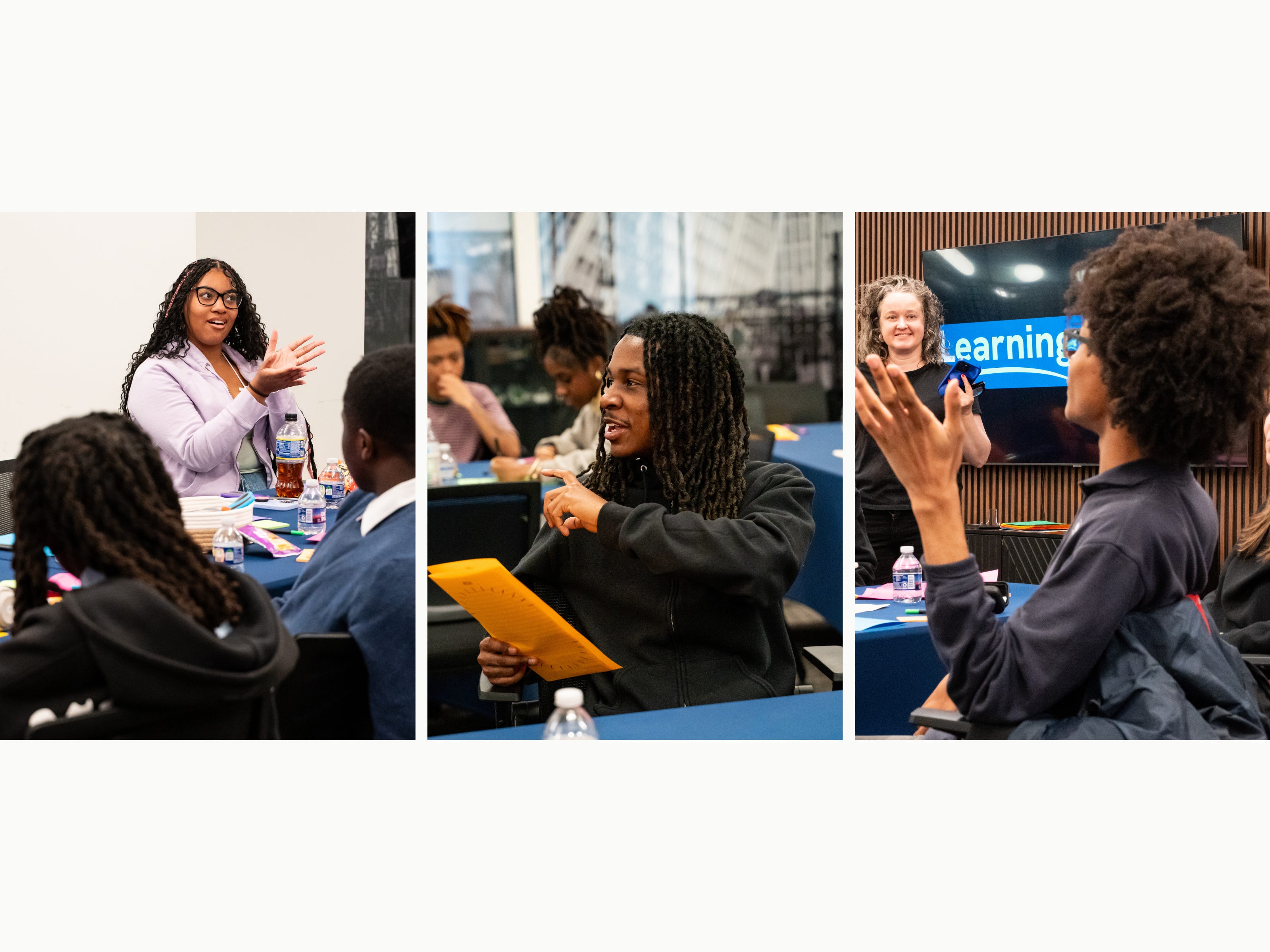
“To be honest,” said J, “I don’t know anything of what I need to do between now and my goals. All I know is that next I go to college. That’s it. Then what?” He looked at me, his open-faced dancing with a light panic.
E had a different response. There was too much to do. How was she going to do it all, what should she do first, her worksheet was cluttered with lists and lines connecting one thing to another. She looked burdened as though peering up at the group from underneath a tidal wave of perfectionism.
“Good.” I beamed at them both as they sat in their discomfort. “Excellent work.” Then another young man spoke up.
“I know I like people and I’m good with people. And I want to give back but then I have long stretches where I tend to isolate.”
“Fantastic!” I cheered.
What’s missing? Or put another way, what could we add to make a real difference to these experiences?
One thing this group came up with was a kind of Mastermind where they meet the first Monday of each month (that way it’s always in place for the young man who tends to isolate), discuss their goals, their next steps (so J always has an action to take), and troubleshoot (so E knows what to prioritize) for each other.
And that was just one idea. The room was full of them. That’s what three hours of co-design can do.
04 The Data Is Real
This may sound like facilitator magic. And of course, when partnering with young people, the foremost goal is to hold space for them to grow and develop into the extraordinary adults they were born to be. Not extract data.
But the insights produced through a co-design session like this are real and actionable.
It’s the kind of information that can expand a project from being intelligent to becoming wise, rooted in the lived realities, fears, hopes, barriers, and aspirations of the people most impacted by the systemic issues we’re working to shift.
Across surveys, worksheets, timelines, discussion prompts, and group reflections, we collected insights around:
Long-term visions for adulthood and financial stability
What young people hold “success” to actually look and feel like
Students emotional relationship to money
Structural barriers they experience
Support systems that are missing
The identities they hope to grow into (not just what they want to have, but who they want to be)
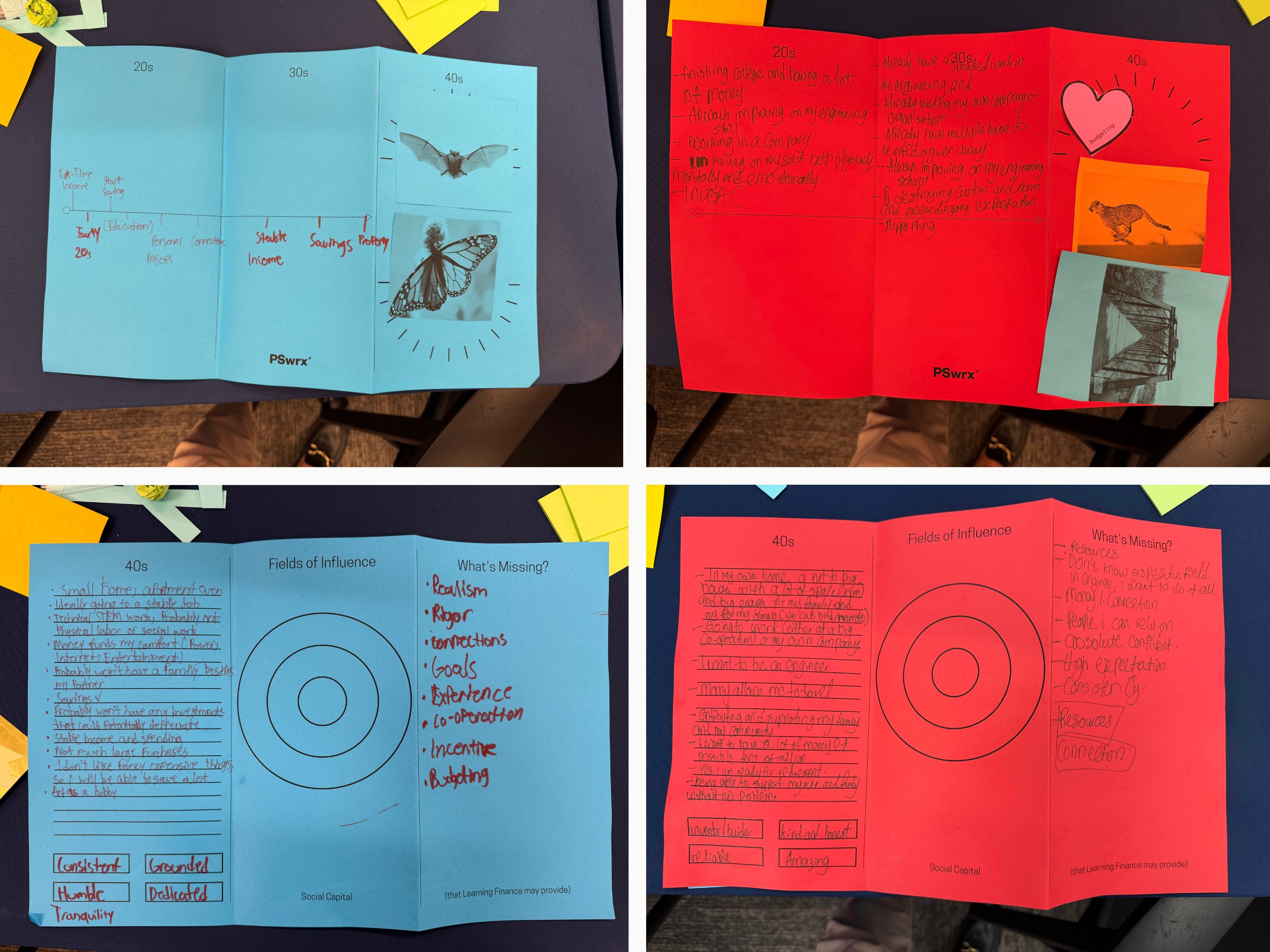
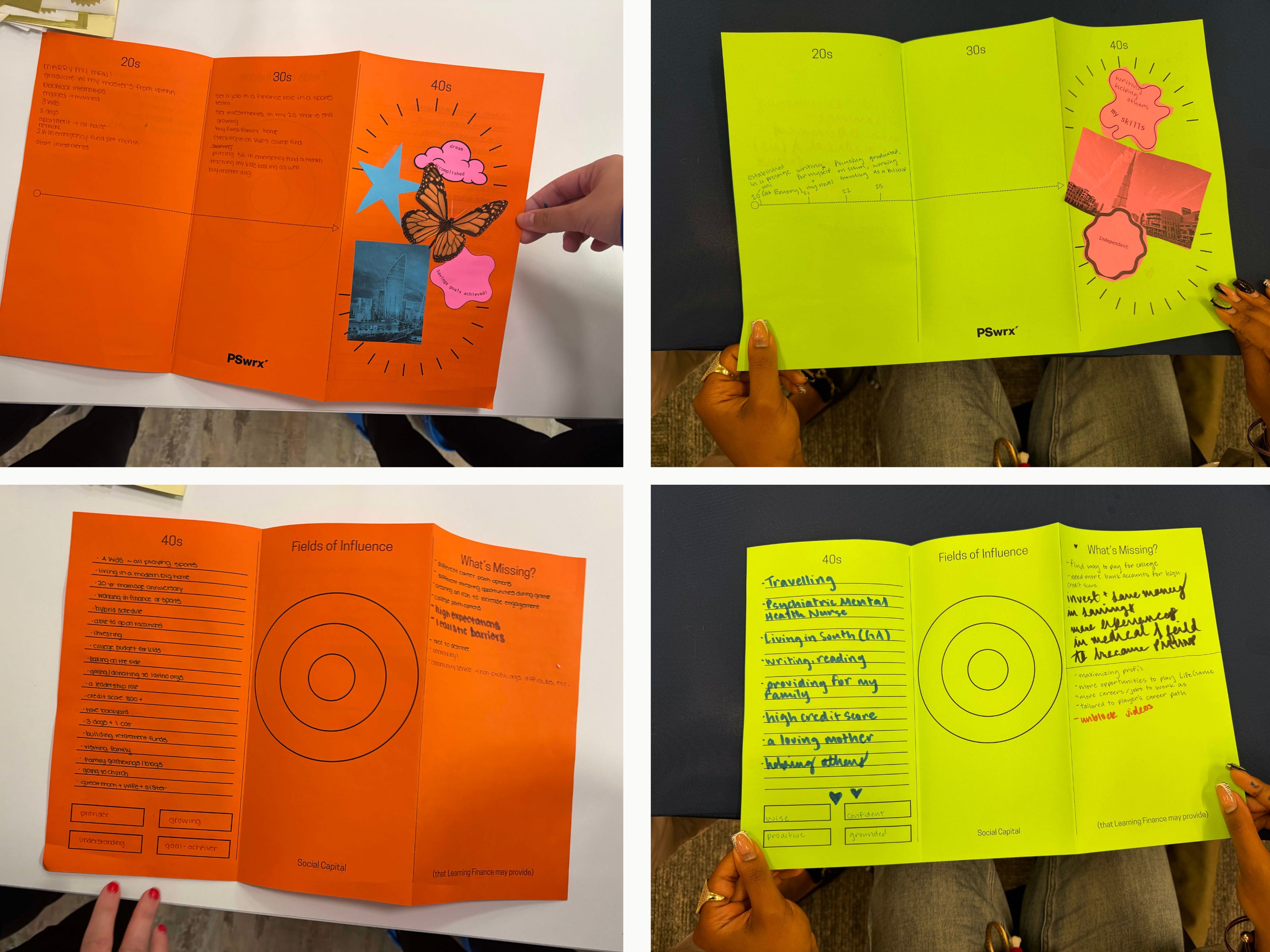
Again and again students described wanting lives that were not extravagant, but stable.
Financial ease at home. Time with family. The ability to travel without worry. Savings. Good credit. The ability to support parents and siblings. Enough breathing room to make meaningful choices.
The words “stable,” “free,” and “comfortable” appeared constantly.
So did generosity.
Many students imagined futures where their success allowed them to:
support family members, especially their moms
give back to their communities
mentor others
create nonprofits
fund programs
build generational wealth
or simply make life easier for the people they love
Just as revealing were the answers to the question: What’s missing?
guidance
mentorship
accountability
clarity
time management
emotional support
professional networks
confidence
structure
consistency
community
And students described their future identities, they repeatedly chose words like:
generous
disciplined
reliable
focused
humble
resilient
kind
determined
inspirational
understanding
Not rich.
Not famous.
Not dominant.
Useful. Stable. Loving. Respected.
Free.
Want to connect?
Email me: rachel at rachel-g-barnard.com
Connect on LinkedIn
Read more of my work: Creative Civility on Substack
Hire me: Creative Civility
You are a magic maker ❤️